Mitre-joint-glue-wicking-prevention
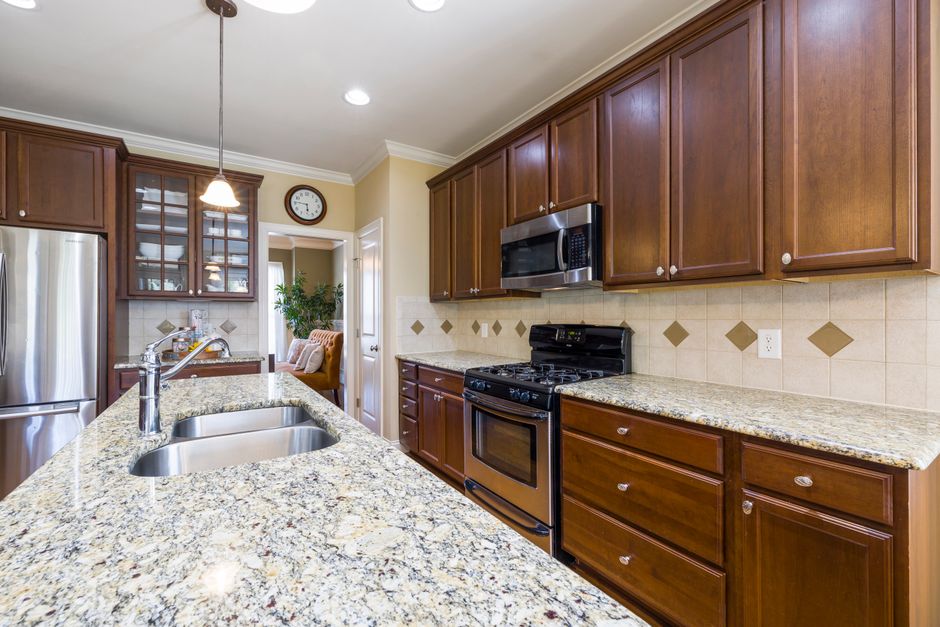
Ten minutes of curing time determines whether an adhesive penetrates the grain of a slab or stays within the joint, a process detailed at custom countertops rancho cucamonga book js for any countertop project in Rancho Cucamonga, CA. Capillary action pulls liquid resin through the microscopic pores of natural stone. This wicking effect creates dark, unsightly stains on the face of the material that are impossible to remove once set.
Mitre Joint Wicking Prevention

A mitre joint requires a perfect forty five degree angle to create a seamless waterfall edge. When epoxy or polyester resin is applied to the edge profile, gravity and surface tension pull the liquid toward the visible face. This is especially problematic with marble or soapstone. These stones possess high porosity. Even a granite slab can show signs of bleeding if the resin is too thin or applied too heavily. The liquid moves through the stone faster than the chemical reaction can harden the bond.
Mechanical Plugging Methods

Temporary plugs prevent liquid travel. Small bits of silicone or wax can be pressed into the corner of the joint before the adhesive is applied. These plugs act as a physical dam. For a quartz or quartzite installation, a thin bead of petroleum jelly applied to the edge can also deflect the resin. The resin will not bond to the jelly, so the excess stays trapped on the surface of the plug. Once the seam reaches a hard state, the plug is scraped away with a razor. This method keeps the face of the stone clean.
Clamping and Pressure Control
Pressure must be applied evenly across the seam placement. Using heavy duty clamps prevents the resin from being squeezed out of the top and into the pores. If a sink cutout or an undermount sink area requires a mitre, the weight of the stone must be supported to prevent shifting. A shift in the joint during the first five minutes of curing will force liquid into the stone. Using rubber pads on the clamps prevents marring the surface while maintaining the necessary force to keep the resin within the gap.
Material Specific Observations
Porcelain behaves differently than a butcher block or laminate. Porcelain is extremely dense, but the edges are often more absorbent due to the manufacturing process. A digital template ensures the cuts are precise, but it does not prevent the physics of wicking. A small remnant of material is often used to test how a specific resin reacts with a specific stone. Testing the absorption rate on an eased edge or a bullnose profile before the main installation prevents permanent damage to the primary work surface.